Collagen Type II, Chicken, Lyophilized, 10 mg
Highest quality (>99%) Collagen type II (CII) protein, purified from chicken sternum, for the induction of arthritis in the Collagen-Induced Arthritis (CIA) model. Lyophilized. Can be reconstituted to desired concentration. ...
Protein
804002-lyo
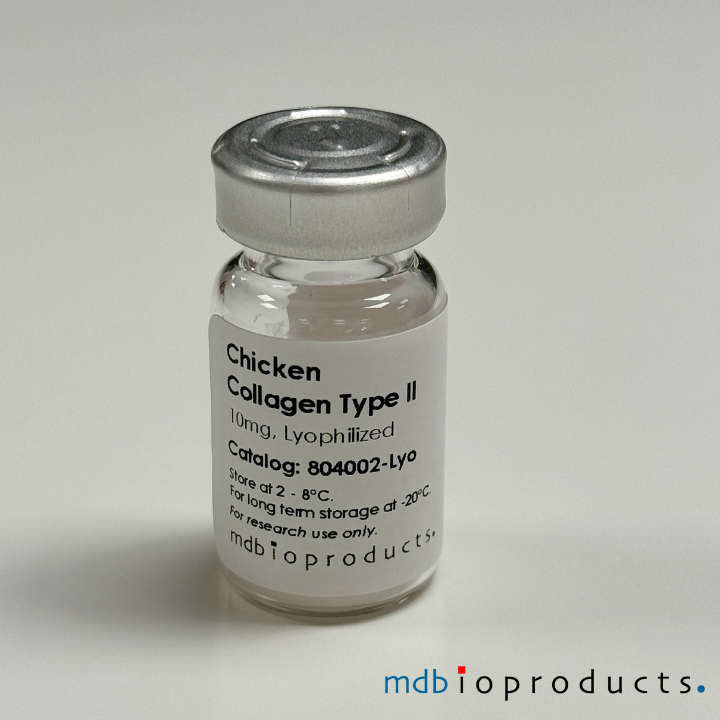
Highest quality (>99%) Collagen type II (CII) protein, purified from chicken sternum, for the induction of arthritis in the Collagen-Induced Arthritis (CIA) model. Lyophilized. Can be reconstituted to desired concentration.
Type II collagen (CII) is a fibrillar collagen that is primarily located in cartilage tissue. The major molecular form of collagen in cartilage is type II collagen. Type II collagen is also located in the vitreous humor of the eye, the inner ear, the nose, and the intervertebral discs of the spine. The function of type II collagen is to provide tensile strength and give cartilage the ability to resist shearing forces. Mutations of the COL2A1 gene affect the synthesis of type II collagen and cause chondrodysplasias. This is characterized by abnormal cartilage that leads to bone and joint deformities. The degradation of collagen type II is an early indicator of osteoarthritis.
Type II Collagen and Adjuvent Susceptibility to CIA is linked to MHC class II molecules and is dependent upon the species of type II collagen used for immunization. Various species of highly purified Type II Collagen are supplied lyophilized and in solution for use in the induction of arthritis in vivo.
Symbol/Related Terms:
- COL2A1
- pro-alpha 1(II) chain
- Achondrogenesis
- Hypochondrogenesis
- Spondyloepiphyseal dysplasia
- Osteoarthritis (OA)
- Collagen Induced Arthritis (CIA)
References/Citations:
Biesemann, N., Margerie, D., Asbrand, C., Rehberg, M., Savova, V., Agueusop, I., Klemmer, D., Ding-Pfennigdorff, D., Schwahn, U., Dudek, M., Heyninck, K., De Tavernier, E., Cornelis, S., Kohlmann, M., Nestle, F. O., & Herrmann, M. (2023). Additive efficacy of a bispecific anti-TNF/IL-6 nanobody compound in translational models of rheumatoid arthritis. Science translational medicine, 15(681), eabq4419. https://doi.org/10.1126/scitranslmed.abq4419
Li, L., Freitag, J., Asbrand, C., Munteanu, B., Wang, B. T., Zezina, E., ... & Biesemann, N. (2022). Multi-omics profiling of collagen-induced arthritis mouse model reveals early metabolic dysregulation via SIRT1 axis. bioRxiv.
Gilis, E., Gaublomme, D., Staal, J., Venken, K., Dhaenens, M., Lambrecht, S., ... & Dumas, E. (2019). Deletion of Mucosa-Associated Lymphoid Tissue Lymphoma Translocation Protein 1 in Mouse T Cells Protects Against Development of Autoimmune Arthritis but Leads to Spontaneous Osteoporosis. Arthritis & Rheumatology, 71(12), 2005-2015.
Chuang, H. C., Chen, Y. M., Chen, M. H., Hung, W. T., Yang, H. Y., Tseng, Y. H., & Tan, T. H. (2019). AhR–ROR-γt complex is a therapeutic target for MAP4K3/GLKhighIL-17A high subpopulation of systemic lupus erythematosus. The FASEB Journal, 33(10), 11469-11480.
Moschovakis, G. L., Bubke, A., Friedrichsen, M., Ristenpart, J., Back, J. W., Falk, C. S., ... & Förster, R. (2018). The chemokine receptor CCR7 is a promising target for rheumatoid arthritis therapy. Cellular & molecular immunology
Verheul, M. K., Vierboom, M. P., Bert, A., Toes, R. E., & Trouw, L. A. (2017). Anti-carbamylated protein antibodies precede disease onset in monkeys with collagen-induced arthritis. Arthritis research & therapy, 19(1), 246.
Moschovakis, G. L., Bubke, A., Friedrichsen, M., Falk, C. S., Feederle, R., & Förster, R. (2017). T cell specific Cxcr5 deficiency prevents rheumatoid arthritis. Scientific Reports, 7(1), 8933.
Kurowska-Stolarska, M., Alivernini, S., Melchor, E. G., Elmesmari, A., Tolusso, B., Tange, C., ... & Stewart, L. (2017). MicroRNA-34a dependent regulation of AXL controls the activation of dendritic cells in inflammatory arthritis. Nature communications, 8, 15877.
Vierboom, M. P., Breedveld, E., Keehnen, M., Klomp, R., & Bakker, J. (2017). Pain Relief in Nonhuman Primate Models of Arthritis. In Inflammation (pp. 411-417). Humana Press, New York, NY
Biton, J., Athari, S. K., Thiolat, A., Santinon, F., Lemeiter, D., Hervé, R., ... & Girard, J. P. (2016). In vivo expansion of activated Foxp3+ regulatory T cells and establishment of a type 2 immune response upon IL-33 treatment protect against experimental arthritis. The Journal of Immunology, 1502124.
Athari, S. K., Poirier, E., Biton, J., Semerano, L., Hervé, R., Raffaillac, A., ... & Boissier, M. C. (2016). Collagen-induced arthritis and imiquimod-induced psoriasis develop independently of interleukin-33. Arthritis research & therapy, 18(1), 143.
Vierboom, M. P. M., Breedveld, E., Kap, Y. S., Mary, C., Poirier, N., 't Hart, B. A., & Vanhove, B. (2016). Clinical efficacy of a new CD28‐targeting antagonist of T cell co‐stimulation in a non‐human primate model of collagen‐induced arthritis. Clinical & Experimental Immunology, 183(3), 405-418.
Perez, J., Dansou, B., Hervé, R., Levi, C., Tamouza, H., Vandermeersch, S., ... & Boissier, M. C. (2015). Calpains released by T lymphocytes cleave TLR2 to control IL-17 expression. The Journal of Immunology, 1500749.
Vicente, R., Quentin, J., Mausset-Bonnefont, A. L., Chuchana, P., Martire, D., Cren, M., ... & Louis-Plence, P. (2015). Nonclassical CD4+ CD49b+ regulatory T cells as a better alternative to conventional CD4+ CD25+ T cells to dampen arthritis severity. The Journal of Immunology, 1501069.
Van Roy, M., Ververken, C., Beirnaert, E., Hoefman, S., Kolkman, J., Vierboom, M., ... & Jacobs, S. (2015). The preclinical pharmacology of the high affinity anti-IL-6R Nanobody® ALX-0061 supports its clinical development in rheumatoid arthritis. Arthritis research & therapy, 17(1), 135.
Lindh, I., Snir, O., Lönnblom, E., Uysal, H., Andersson, I., Nandakumar, K. S., ... & Holmdahl, R. (2014). Type II collagen antibody response is enriched in the synovial fluid of rheumatoid joints and directed to the same major epitopes as in collagen induced arthritis in primates and mice. Arthritis research & therapy, 16(4), R143.
Roy, L. D., Sahraei, M., Schettini, J. L., Gruber, H. E., Besmer, D. M., & Mukherjee, P. (2014). Systemic neutralization of IL-17A significantly reduces breast cancer associated metastasis in arthritic mice by reducing CXCL12/SDF-1 expression in the metastatic niches. BMC cancer, 14(1), 225.
Chen, Y. M., Chuang, H. C., Lin, W. C., Tsai, C. Y., Wu, C. W., Gong, N. R., ... & Chen, D. Y. (2013). Germinal Center Kinase–like Kinase Overexpression in T Cells as a Novel Biomarker in Rheumatoid Arthritis. Arthritis & Rheumatism, 65(10), 2573-2582.
Marenzana, M., Vugler, A., Moore, A., & Robinson, M. (2013). Effect of sclerostin-neutralising antibody on periarticular and systemic bone in a murine model of rheumatoid arthritis: a microCT study. Arthritis Res Ther, 15(5), R125.
Iqbal, A. J., Cooper, D., Vugler, A., Gittens, B. R., Moore, A., & Perretti, M. (2013). Endogenous galectin-1 exerts tonic inhibition on experimental arthritis. The Journal of Immunology, 191(1), 171-177.
Vierboom, M., Breedveld, E., Kondova, I., & 't Hart, B. (2010). Collagen-induced arthritis in common marmosets: a new nonhuman primate model for chronic arthritis. Arthritis Research and Therapy, 12(5), R200.
Asquith, D. L., Miller, A. M., Hueber, A. J., Liew, F. Y., Sattar, N., & McInnes, I. B. (2010). Apolipoprotein E–deficient mice are resistant to the development of collagen‐induced arthritis. Arthritis & Rheumatism, 62(2), 472-477.
Pufe, T., Petersen, W., Kurz, B., Tsokos, M., Tillmann, B., & Mentlein, R. (2003). Mechanical factors influence the expression of endostatin—an inhibitor of angiogenesis—in tendons. Journal of orthopaedic research, 21(4), 610-616.
Bäcklund, J., Treschow, A., Bockermann, R., Holm, B., Holm, L., Issazadeh‐Navikas, S., ... & Holmdahl, R. (2002). Glycosylation of type II collagen is of major importance for T cell tolerance and pathology in collagen‐induced arthritis. European journal of immunology, 32(12), 3776-3784.
Apolipoprotein E-deficient mice are resistant to the development of collagen-induced arthritis.
Asquith DL, Miller AM, et al. Arthritis Rheum. 2010 Feb; 62(2):472-7.
Reversible changes in serum immunoglobulin galactosylation during the immune response and treatment of inflammatory autoimmune arthritis.Van Beneden K, et al. Annals of the rheumatic diseases. 2009; 68(8):1360-5.
Product Insert (PDF) - Informational use only. Please refer to insert included with product.
Data/Specifications:
- Concentration: Can be reconstituted to concentration of choice.
- Purity: >99% as determined by SDS-PAGE and visualized by Coomassie blue staining
- Purification: Differential salt precipitation
- Source: chick sternum
- Form: Lyophilized
Related Products
Additional products you might interested in.
-
ACC1, Monoclonal Antibody, 100ugThis antibody binds ACC1 to the citrullinated triple-helical collagen type II (CII) epitope (position 359-369), the C1 epitope. The ACC1 antibo...
-
Collagen Type II, Monoclonal Antibody (Clone M2139), 100ugThis antibody (clone 2139) recognizes the conformational J1 epitope on the triple-helical structure of the native Collagen Type II molecule. Th...
-
Collagen Type XI, Monoclonal Antibody, 100ugThis antibody (clone L10D9) binds to the triple-helical D3 epitope on collagen XI, which is shared with Collagen type II. The antibody binds to...
-
ACC4 (IgG1), Monoclonal Antibody, 100ugThis antibody is an anti-citrullinated protein antibody (ACPA) that, on Collagen alpha-1 (II) chain, binds specifically to citrullinated C1 epi...
-
ACC4 (IgG2b), Monoclonal Antibody, 100ugThis antibody is an anti-citrullinated protein antibody (ACPA) that on Collagen alpha-1 (II) chain binds specifically to citrullinated C1 epito...
-
ACPA, Monoclonal Antibody (Clone E4NG), 100ugThis antibody recognizes multiple citrullinated proteins/peptides, including CCP2, citrullinated collagen type 2 (COL2) peptides, citrullinated...
-
ACPA (Negative Control), Monoclonal Antibody (Clone E4NG-Mutant), 100ugThis antibody is a negative control for the E4NG antibody (product number 1061006). It is the mutated version of the E4NG antibody, with identi...
-
Cartilage Oligomeric Matrix Protein (COMP) , Monoclonal Antibody (Clone 15A11), 100ugThis antibody binds to the fourth EGF (Epithelial Growth Factor) -like domain of mouse COMP, comprising residues 232–252, called the P6 epitope...
-
Cartilage Oligomeric Matrix Protein (COMP), Monoclonal Antibody (Clone 16B5), 100ugThis antibody binds to the coiled-coil domain or pentamer COMP. It cross-reacts with mouse, rat and human. Cartilage Oligomeric Matrix Protein ...
-
Collagen Type II, Monoclonal Antibody (Clone CIIC1), 100ugThis antibody binds specifically to the C1 epitope on triple helica collagen type 2. It cross-reacts with mouse, rat, chicken, baboon and horse...
-
ArthritoMab™ Antibody Cocktail for Balb/c, DBA/1, R10.RIII, 50 mgArthritoMab™ Arthritis Inducing Antibody Cocktail is a cocktail of 4 arthritogenic monoclonal antibodies to collagen II (CII) used for inducing art...
-
ArthritoMab™ Antibody Cocktail for C57BL/6, TG, 50 mgArthritoMab™ Antibody Cocktail is a reformulated cocktail of 4 monoclonal antibodies for the induction of arthritis as an alternative to the widely...
-
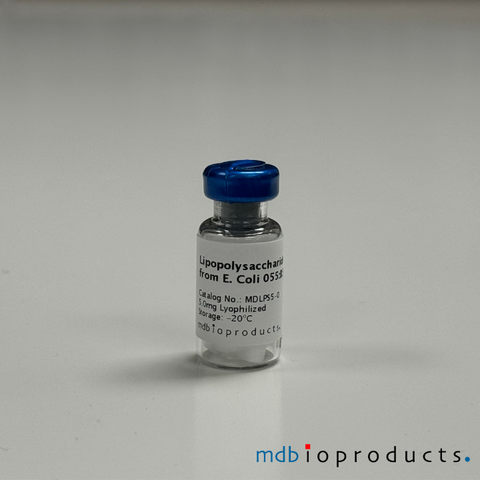
Lipopolysaccharide (LPS), 5.0 mgHighly purified LPS for in vivo and in vitro use. Lipopolysaccharides (LPS), also known as lipoglyans and endotoxins, are large molecules consis...
-
Collagen Type II, Bovine, Immunization Grade, Lyophilized, 10 mgImmunization Grade Collagen type II (CII) protein, purified from fetal bovine articular cartilage, for the induction of arthritis in the Collagen-I...
-
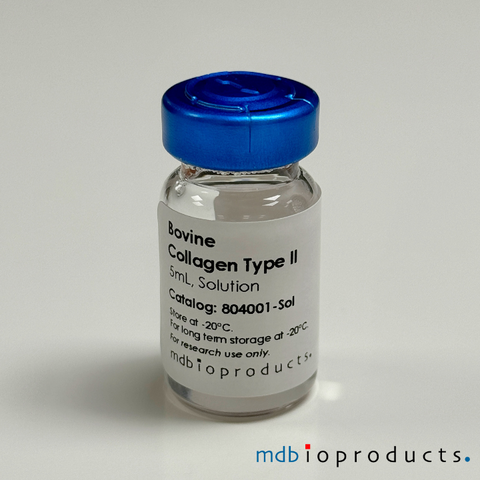
Collagen Type II, Bovine, Immunization Grade, Soluble, 2 mg/mLImmunization Grade Collagen type II (CII) protein, purified from fetal bovine articular cartilage, for the induction of arthritis in the Collagen-I...
-
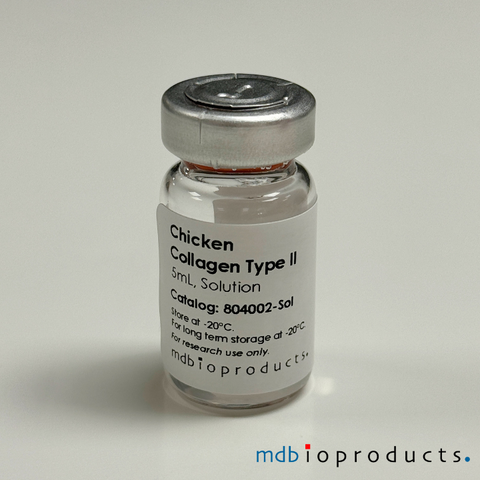
Collagen Type II, Chicken, Soluble, 2 mg/mLHighest quality (>99%) Collagen type II (CII) protein, purified from chicken sternum, for the induction of arthritis in the Collagen-Induced Art...
-
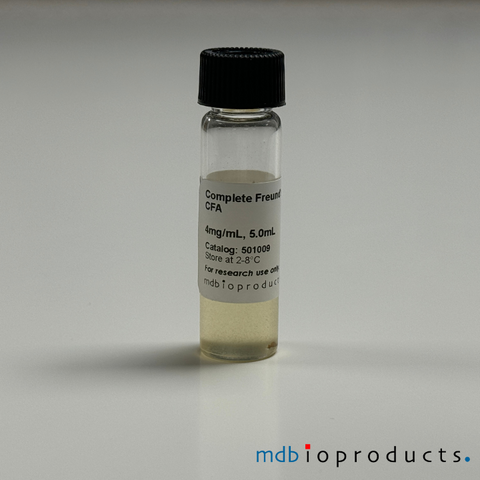
Complete Freund's Adjuvant, 4 mg/mL (5 mL)Complete Freund's Adjuvant (CFA or FCA) is 4 mg/ml M. Tuberculosis (non-viable) in mineral oil. For in-vivo/in-vitro studies. Typically used for th...
-
Complete Freund's Adjuvant, 10 mg/mL (5 mL)Complete Freund's Adjuvant (CFA or FCA) is 10 mg/ml M. Tuberculosis (non-viable) in mineral oil. Typically used to induce Adjuvant-Induced Arthriti...
-
Incomplete Freund's Adjuvant (IFA), 5 mLIncomplete Freund's Adjuvant (IFA or FIA) for booster injections. For in-vivo/in-vitro studies. Incomplete Freund's Adjuvant (IFA or FIA) is widely...
-
Human Collagen Type III, Lyophilized 0.1 mgHuman Collagen Type III protein purified from human placenta. Type III collagen is a fibrillar collagen, and it consists of only one collagen α ch...
-
Human Collagen Type I, Lyophilized 0.1 mgHuman Collagen Type I protein purified from human placenta. Type I collagen is the most abundant collagen and is found in connective tissues includ...
-
Human Collagen Type II, Lyophilized 0.1 mgHuman Collagen Type II protein purified from human cartilage. Collagen Type II is a fibrillar collagen, and the main component of cartilage. Type ...
-
Human Collagen Type IV, Lyophilized, 0.1mgHuman Collagen Type IV protein purified from human placenta. Collagen Type IV is a type of collagen found primarily in the skin within the basement...
-
Human Collagen Type V, Lyophilized, 0.1mgHuman Collagen Type V protein purified from human placenta. Collagen Type V is a fibrillar collagen. Collagen Type V is essential for the fibrilla...
-
Bovine Collagen Type VI, Lyophilized, 0.1mgBovine Collagen Type VI protein purified from bovine placenta. Collagen Type VI is the major collagenous component of microfibrils in elastic fibe...
-
Fibronectin, Human, 5mgFibronectin from human plasma. Fibronectin is a high-molecular-weight glycoprotein of the extracellular matrix that plays a crucial role in c...
-
Fibronectin 40 kDa Fragment Heparin Binding, Human, 0.5mgFibronectin heparin binding 40 kDa fragment. Chymotryptic digest of human plasma fibronectin. Heparin-binding 40 kDa fragment of human plasma...
-
Fibronectin 120 kDa Fragment Cell Attachment, Human, 0.5mgFibronectin heparin binding 120 kDa fragment. Chymotryptic digest of human plasma fibronectin. The Human Fibronectin 120 kDa cell attachment fra...
-
Alpha Fetoprotein, Human, 0.1mgAlpha Fetoprotein extracted from Human Blood Cord. Alpha-fetoprotein (AFP) is a glycoprotein produced mainly by the fetal liver, yolk sac, an...